In our Volvo XC40 ceramic coating case study, we showed what looking after a car properly from new looks like at the end of ownership. A £5,326 uplift on the best instant buyer offer, off the back of just £150+VAT in sale prep.
That post was the bookend at the back. This one is the bookend at the front.
My parents have just taken delivery of a brand new electric Renault 5. The XC40 has gone. The Renault 5 is the replacement. And rather than wait, watch the swirl marks creep in over the first six months, then talk about correction work later, we’re doing what we always tell our customers to do: protect from day one.
We’re also doing something a little different with this one. More on that below.
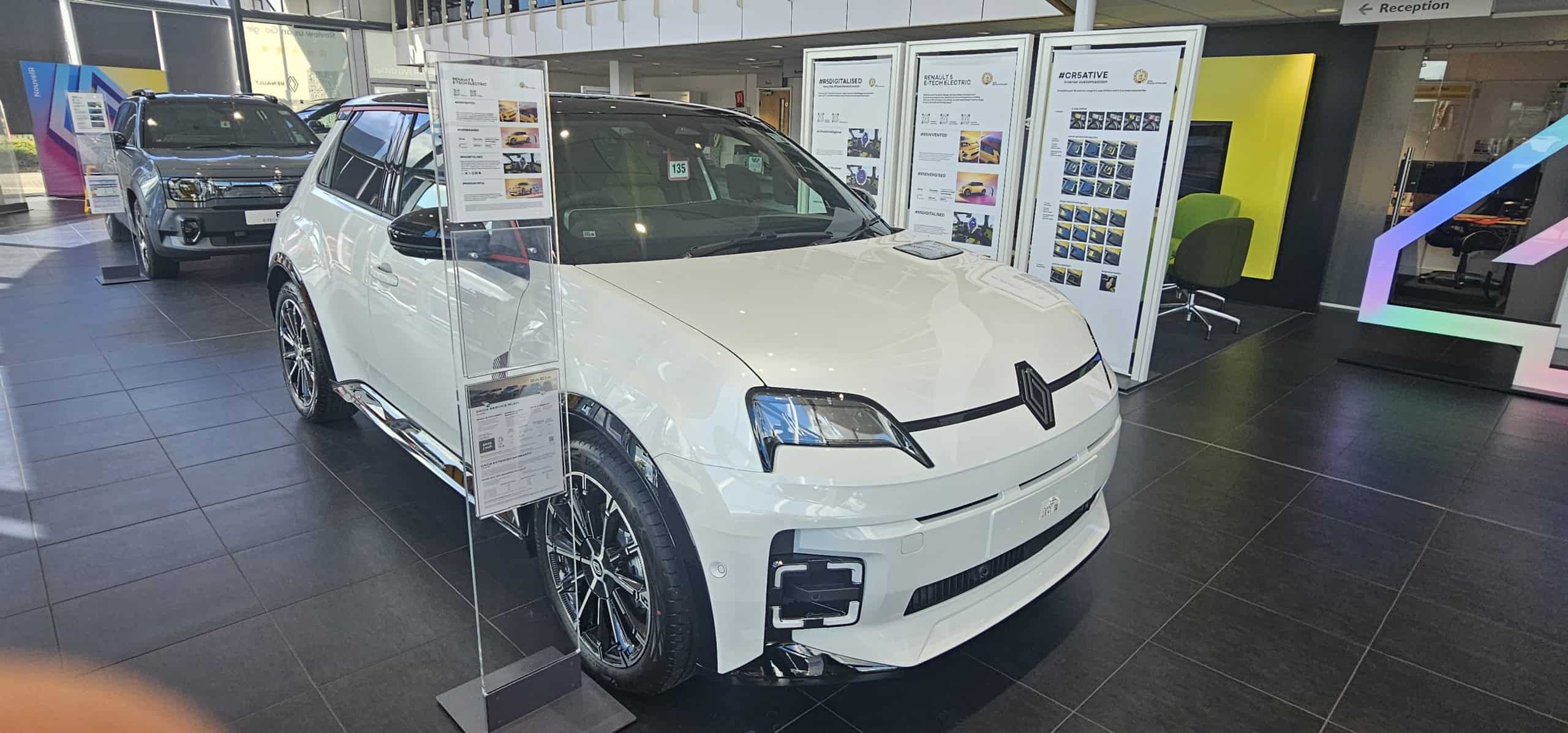
In the showroom
Choosing the right spec, before placing the order
An identical car to the one my parents would order (same trim, same colour, same black roof) sitting on the showroom floor. A chance to walk around it, sit in it, and confirm the spec was right before any deposits changed hands.
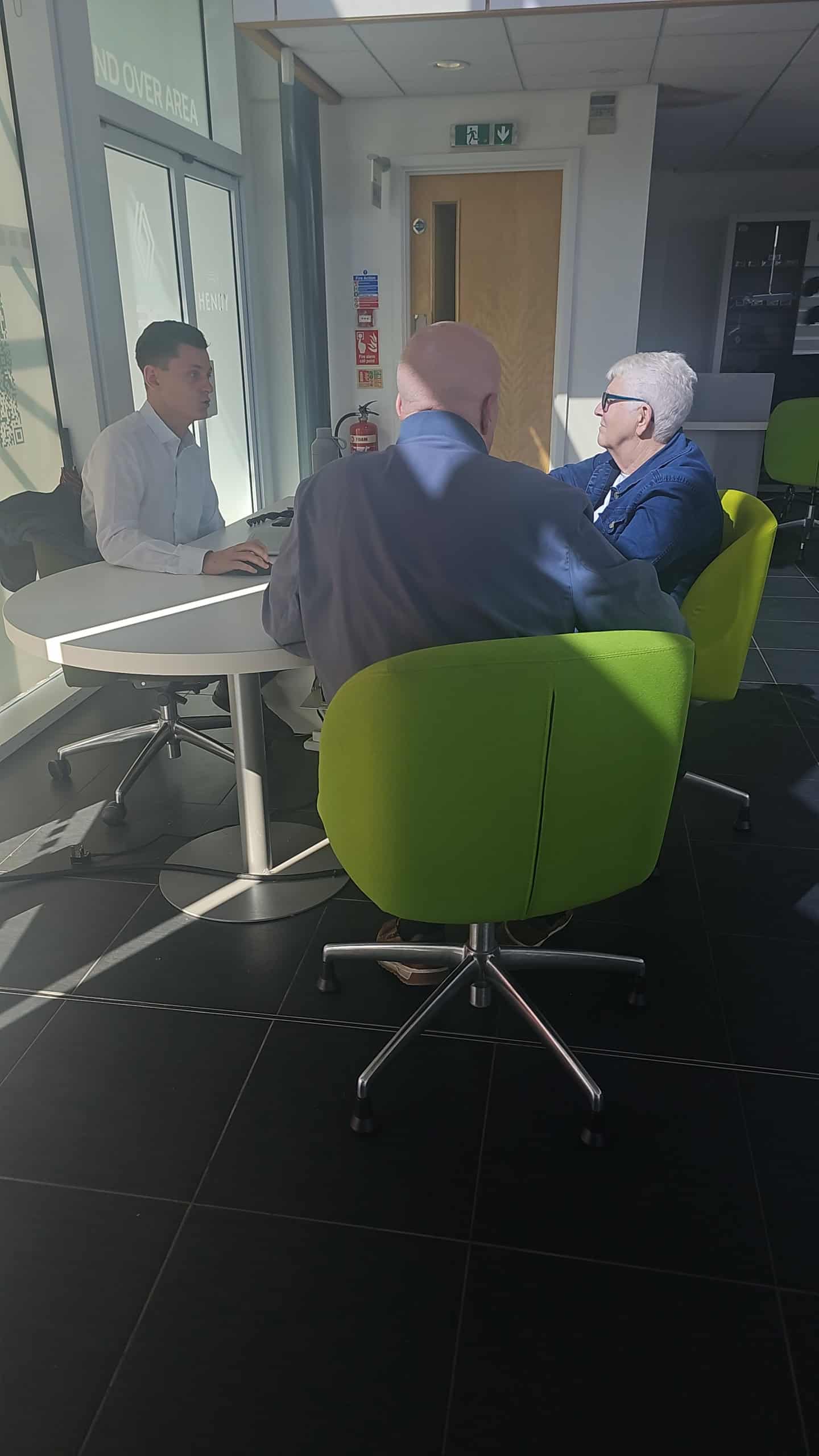
Day zero
Dotting the i’s and crossing the t’s
Final paperwork signed at Renault Portsmouth. From here the car would head straight to the MAX WAX studio at Brighton City Airport. No supermarket car park trips, no automated wash, no driveway sponge and bucket clean in between. The single best moment to start a car’s life properly protected is the one most people miss, and we made sure this one didn’t.
The car
The new Renault 5 Iconic + E-Tech EV is one of the most talked about electric cars of the last twelve months. Reborn as an EV, it picked up European Car of the Year 2025, and it’s the kind of car that turns heads in a way most modern hatchbacks simply don’t. Bright paint, sharp lines, a proper bit of design.
Brand new · zero miles
Arrival at MAX WAX HQ
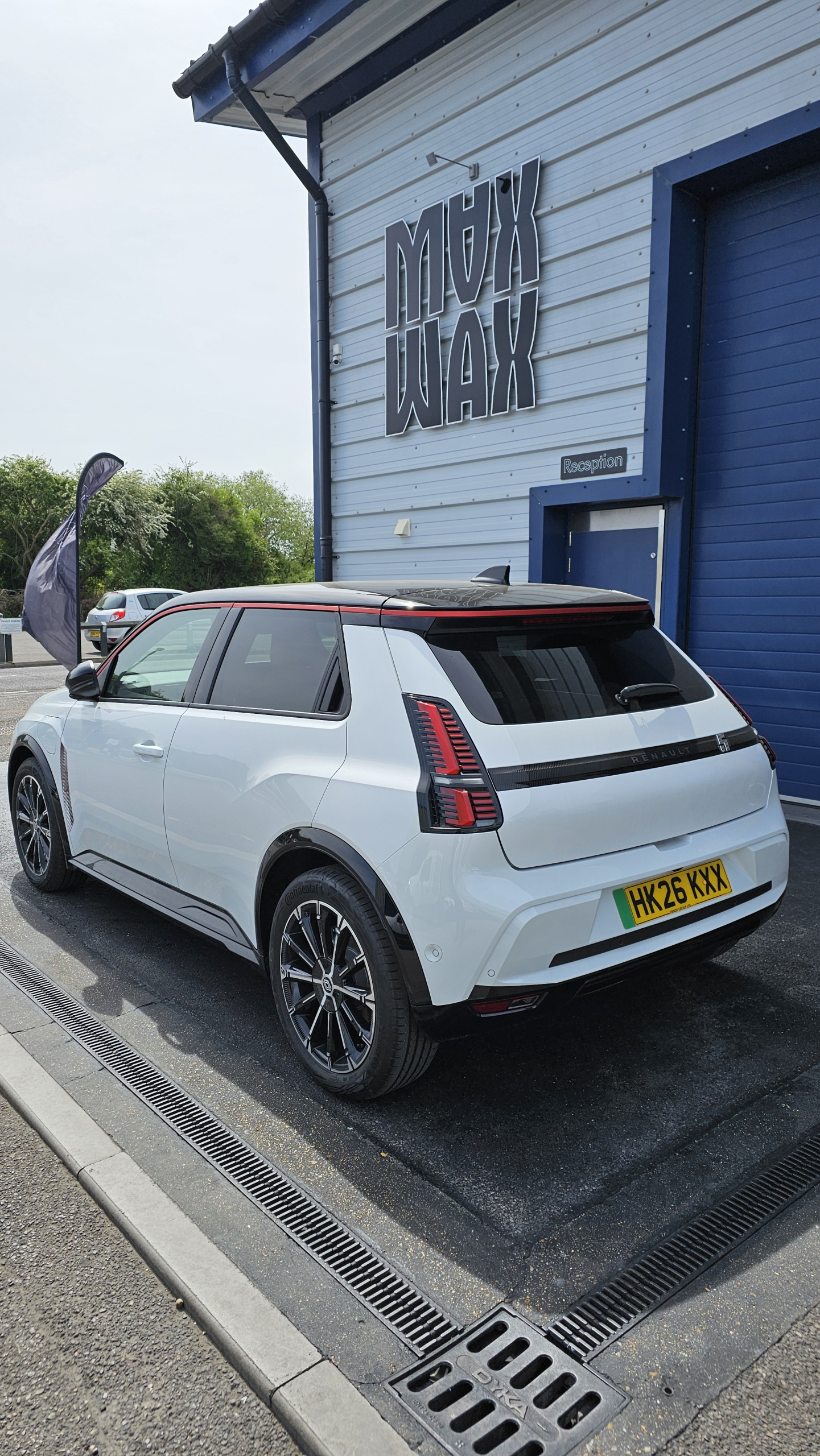
On the wash bay, ready for the first inspection and decontamination wash.
For us, though, the headline isn’t the badge. It’s the paintwork. Modern factory clear coats are thinner than they used to be. Modern car parks are no kinder than they ever were. And anyone who has watched a brand new car pick up its first wash mark in week one knows the feeling. The slight wince. The small calculation about how much that just cost you down the line.
The whole point of new car protection is to never let it get to that point in the first place.
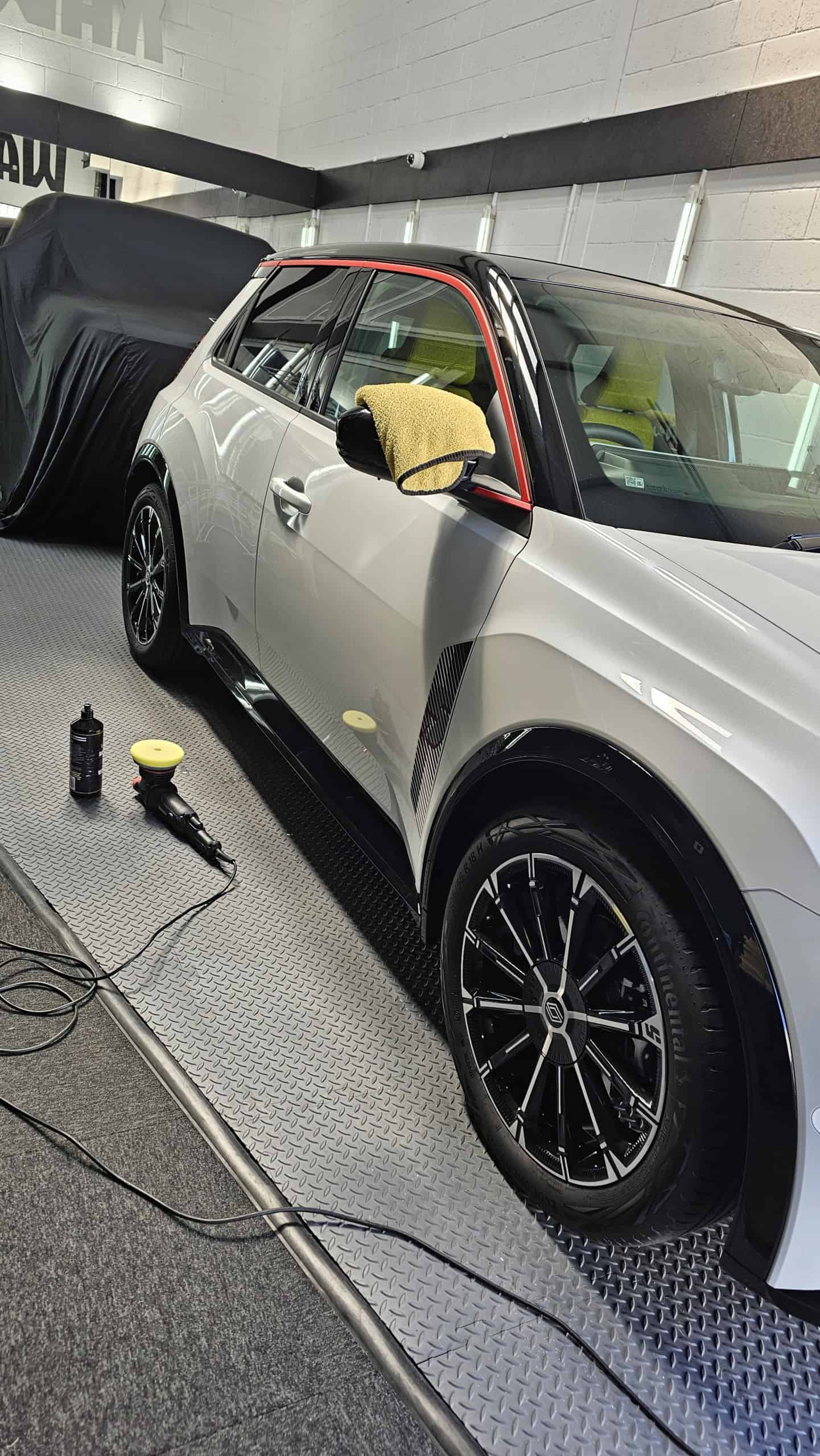
Design
European Car of the Year, and you can see why
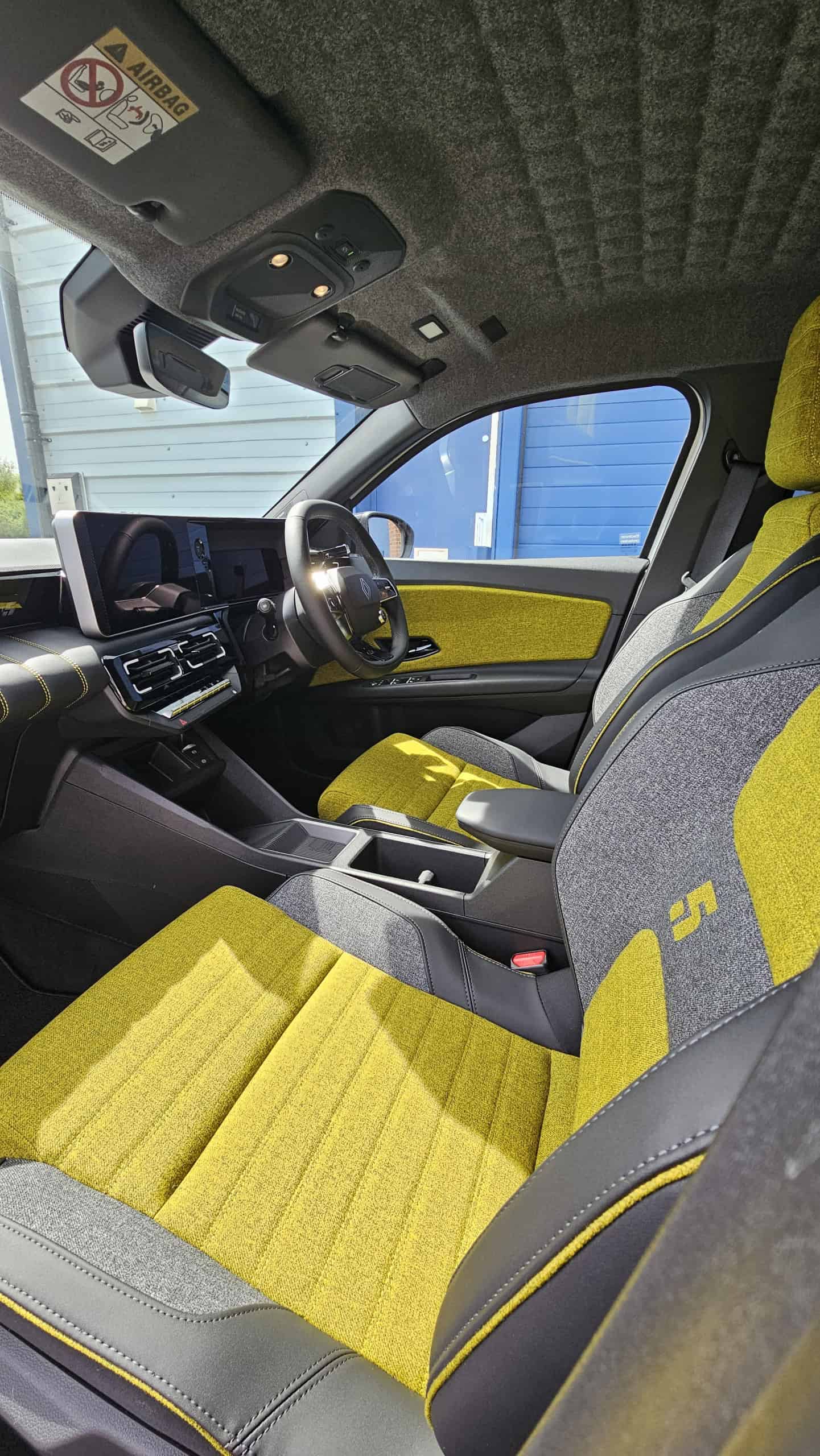
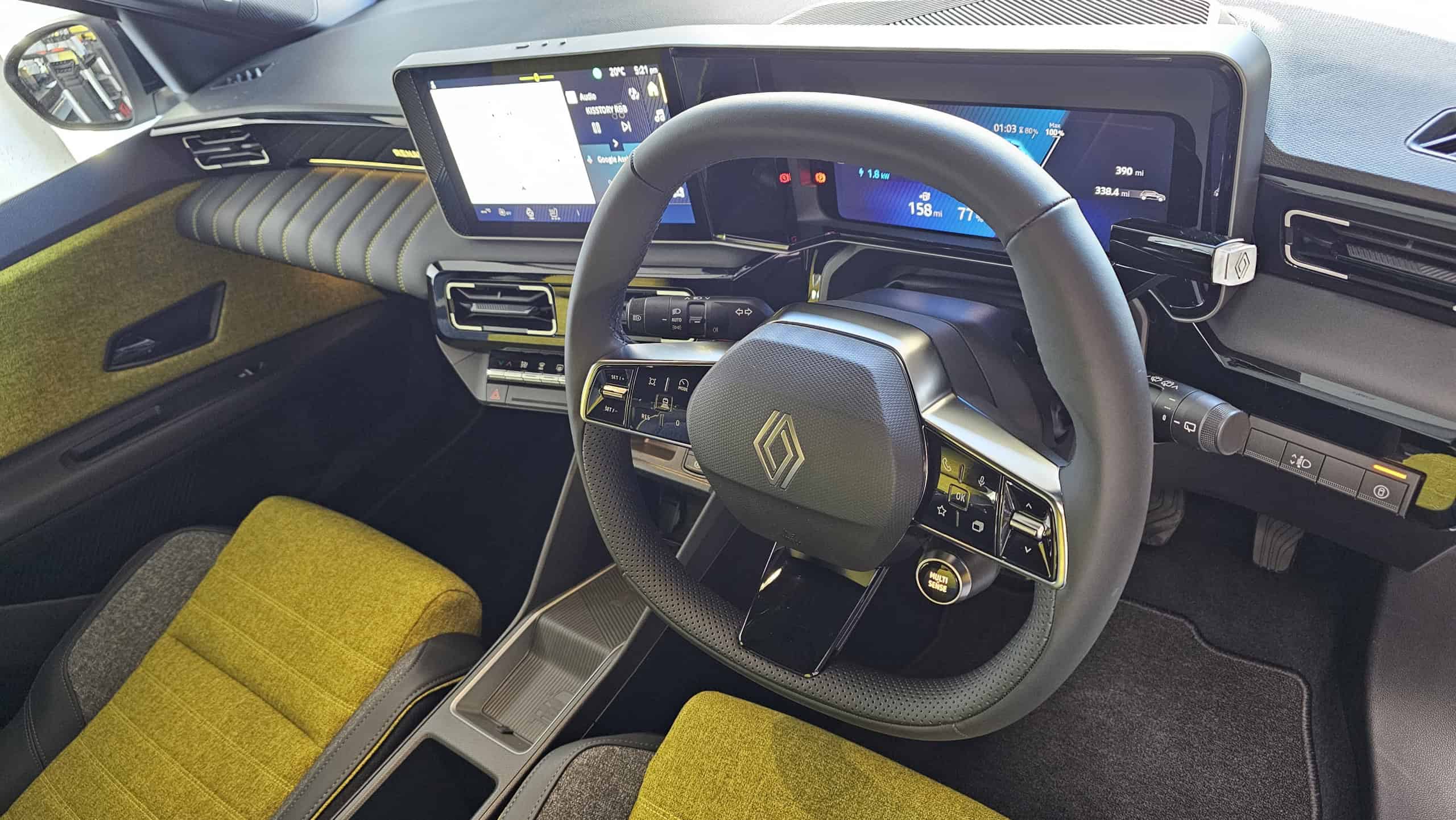
Renault haven’t held back. The yellow accents inside the cabin are unapologetic, the proportions are pure 1970s reborn, and the build quality is genuinely surprising at the price point. It’s the kind of car people stop and look at.
Inside
The same cabin, two angles
Why ceramic coating from day one matters
We say this on every consultation, but it bears repeating because it’s genuinely the most important point we make in our entire new car ceramic coating service.
Once a car has been through six months of automatic washes, supermarket car park trolleys, sponge and bucket weekend cleans, and the odd bird lime left to bake in the sun, the paintwork is not the same paintwork that left the factory. Swirl marks set in. Etching takes hold. Oxidation begins quietly. By the time most owners think about ceramic coating, the conversation is no longer “protect what you have.” It’s “correct what’s already happened, then protect what’s left.”
That’s a much more expensive conversation. It’s also one where the end result, however good, is no longer factory.
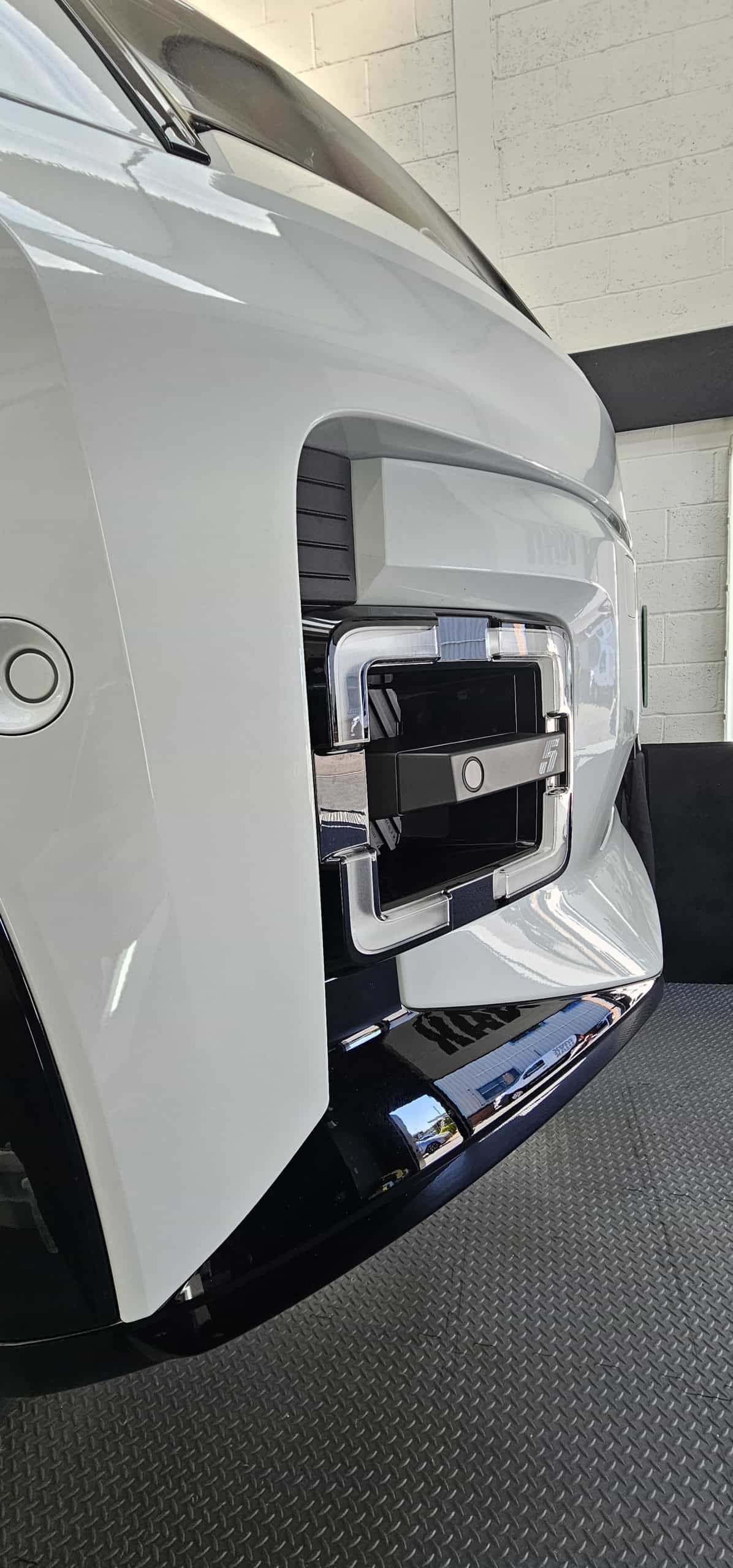
It’s the little things
Even the fog lights have an R5 logo on them
Renault have packed the design with quiet detail. Tiny “5” graphics tucked into the fog light housings, badging on the C pillar, debossed details on the dashboard plastics. The kind of thing you only spot on the second or third walk around. The kind of thing worth protecting.
Paint correction in progress
Dan inspects the clarity between passes
Even on a brand new car, the paintwork needs to look right under inspection lights before any ceramic goes near it. Between every machine polish pass, we stop, inspect, and confirm.
A new car, on day one, on the driveway, with no contamination and no defects. That is the only moment a ceramic coating can do its absolute best work. The bond is cleaner. The clarity is deeper. And the protection lasts longer because there’s nothing trapped underneath.
This is also exactly why we don’t recommend dealer applied paint, glass and fabric protection systems. Dealers have no commercial interest in pointing out that your delivery car has a bumper respray, or a touch up over a stone chip that shouldn’t be there at delivery mileage. A quick coating over the top hides the evidence. We see it on brand new cars constantly. Bring the car to us first, and we’ll give you a full inspection with a written condition report. If anything is amiss, that report becomes evidence to take back to the dealership.
The experiment: Williams 10H and Self Healing on the same car
Here’s where this Renault 5 becomes more than a standard new car protection job.
We work closely with Williams Ceramic Coatings, the same brand we apply across the rest of our customer fleet. The two flagship products in their range are:
- Williams Ceramic Plus 10H. Engineered with 26% solid content, dual layer, 10H hardness, silicon nitride chemical backbone. Industry leading gloss and chemical resistance, lifetime guarantee.
- Williams Self Healing Ceramic. The UK’s first true self healing ceramic coating. Fine swirl marks and wash scratches repair themselves when the panel reaches 60°C, or gradually at room temperature.
Normally these two products are applied as alternatives. A customer chooses one or the other based on use case, budget, and what they want from the finish.
On this car, with Williams’ direct support, we’re applying both. The 10H goes on first as the foundation layer for chemical and UV protection. Then, two weeks later once the 10H has fully cured, the Self Healing layer goes on top to deliver the swirl recovery property on the most visible panels. The aim is to combine the hardness and longevity of the 10H with the cosmetic forgiveness of the self healing layer over a daily driven, real world EV.
Important disclaimer: This is an experiment. Layering both products on the same vehicle is not commercially recommended by Williams, not warranted by the manufacturer, and not something we offer as a paid service. We’re documenting it on a family car, with the manufacturer’s knowledge, purely to learn. Customer cars receive one product or the other, never both, applied strictly to manufacturer specification and covered by the standard Williams guarantee.
What the application looks like
For those who haven’t been through the process before, this is what new car ceramic coating actually involves at our level. None of it is quick.
- Full inspection and condition report. Every panel, under multiple light sources. Paint depth readings. Photographs of any anomaly, no matter how small. This is the document that protects you if the car needs to go back to the dealer.
- Decontamination wash. Snow foam pre wash, two bucket contact wash, iron fallout removal, tar spot removal, clay bar across every panel. The car is now chemically clean.
- Panel by panel paint correction. Even a brand new car needs light correction: factory transit film, faint marring from PDI, swirl marks from the dealer pre delivery wash. A single stage machine polish refines the paint to a defect free state.
- IPA wipe down. Removes all polishing oils so the ceramic has a perfectly clean surface to bond to.
- Coating application, stage one. Williams 10H applied panel by panel, levelled, and left to flash. The foundation layer.
- Initial cure. The car is left to harden in controlled conditions for 24+ hours before it sees water, then driven away to fully chemically cross link over the following two weeks.
- Coating application, stage two. Two weeks later, the car returns to the studio. Once we’ve confirmed the 10H is fully cured, Williams Self Healing is applied over the top, panel by panel, as the upper layer.
- Final cure. Another 24+ hours undisturbed before the car sees water again. From this point on the layered system is live.
For a car this size with both products being applied, you’re looking at a two day initial visit, then a return visit two weeks later for the self healing layer. Roughly three days of hands on work spread across two and a bit weeks. Done properly, it stays done.
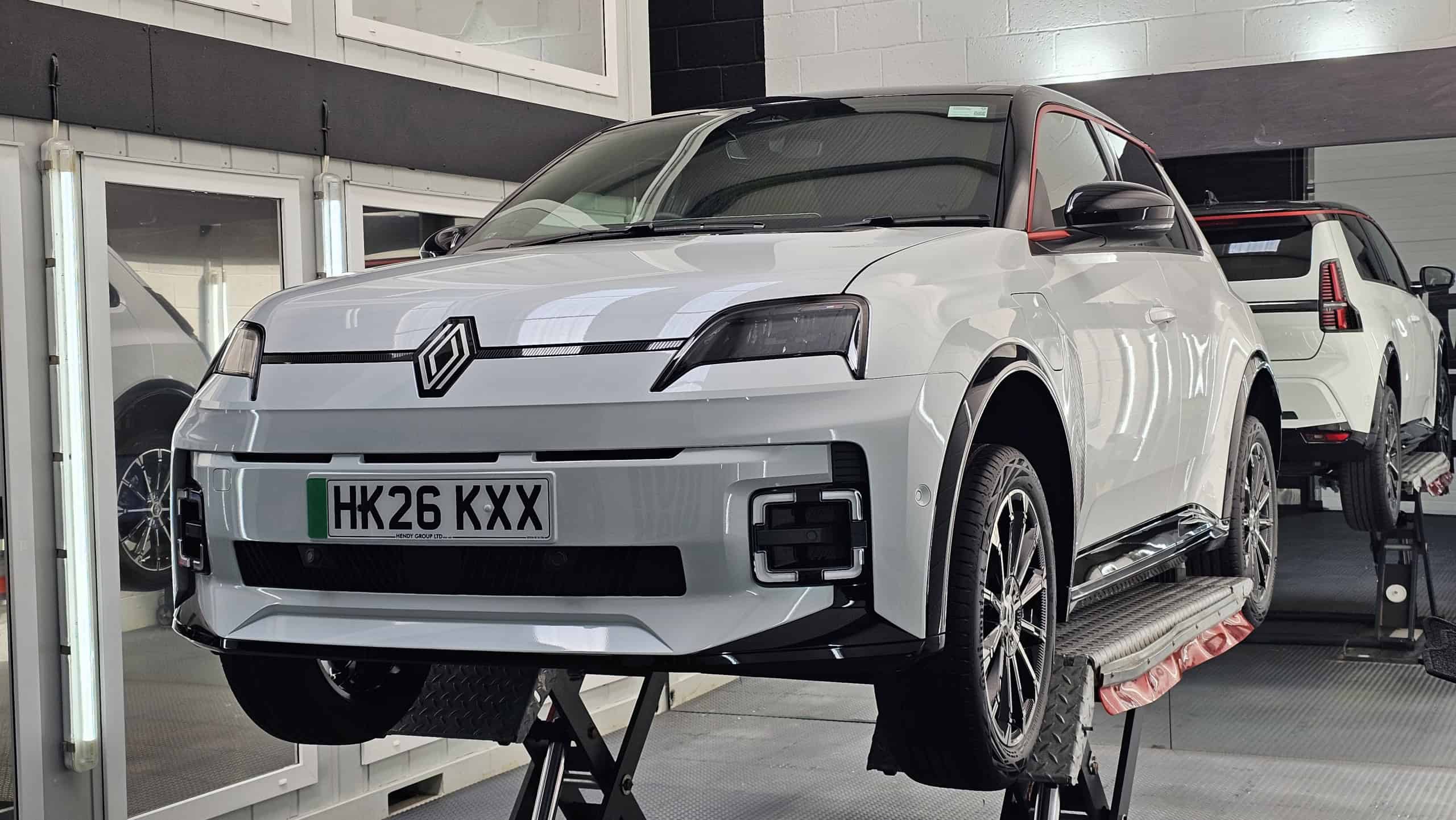
Up on the ramp
Decontamination, done properly
Working from the floor leaves the lower sills, wheel arches, and underside of the bumpers half decontaminated at best. The car goes up on the ramp so we can access every panel, every edge, and every shut line. Not just the ones you can see from standing height.
Decontamination complete
Ready for machine polishing
A walk around of the Renault 5 after the full decontamination wash, claying, and chemical decon. Now the surface is genuinely clean, the polishing can begin.
Machine polishing
Dan, dual action machine, working the roof
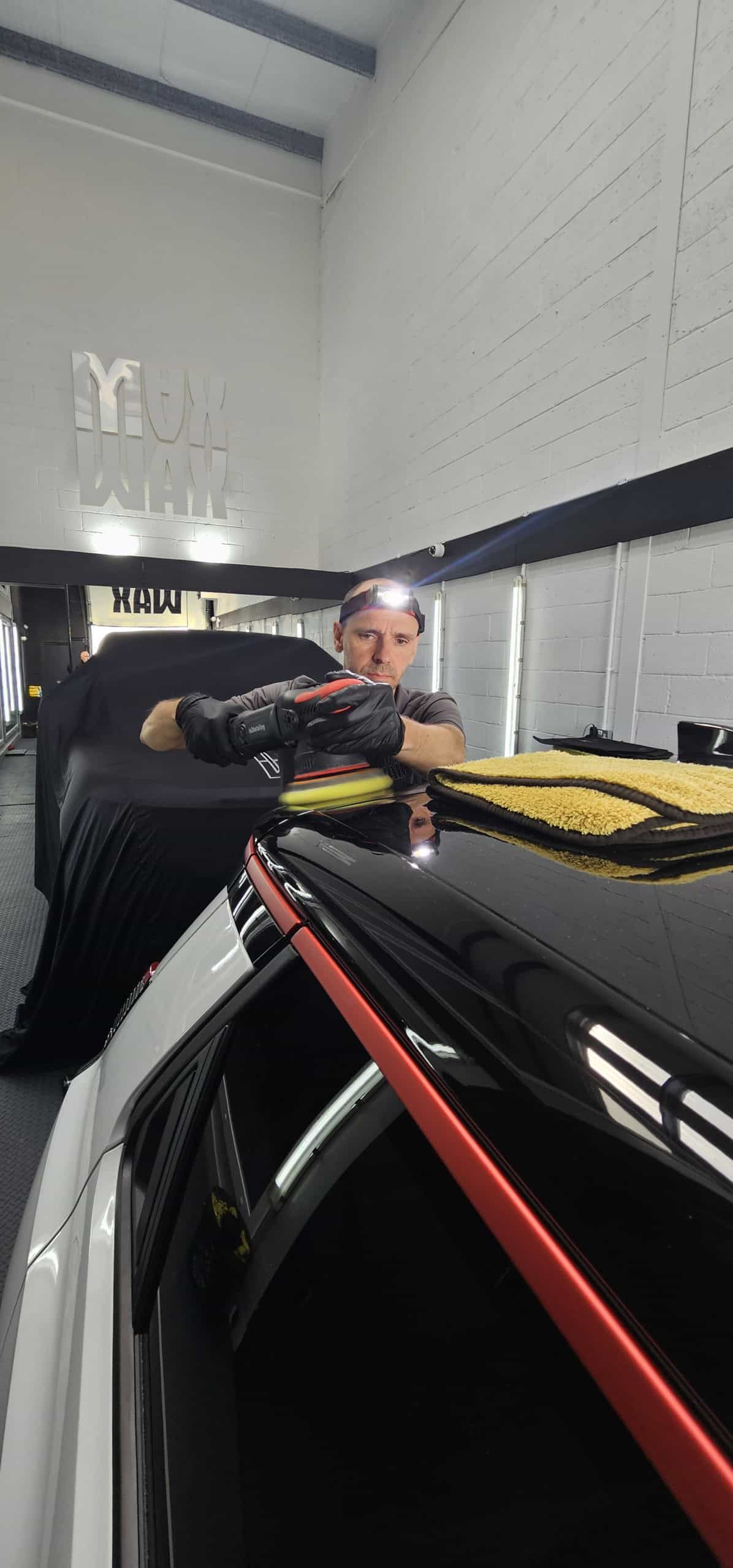
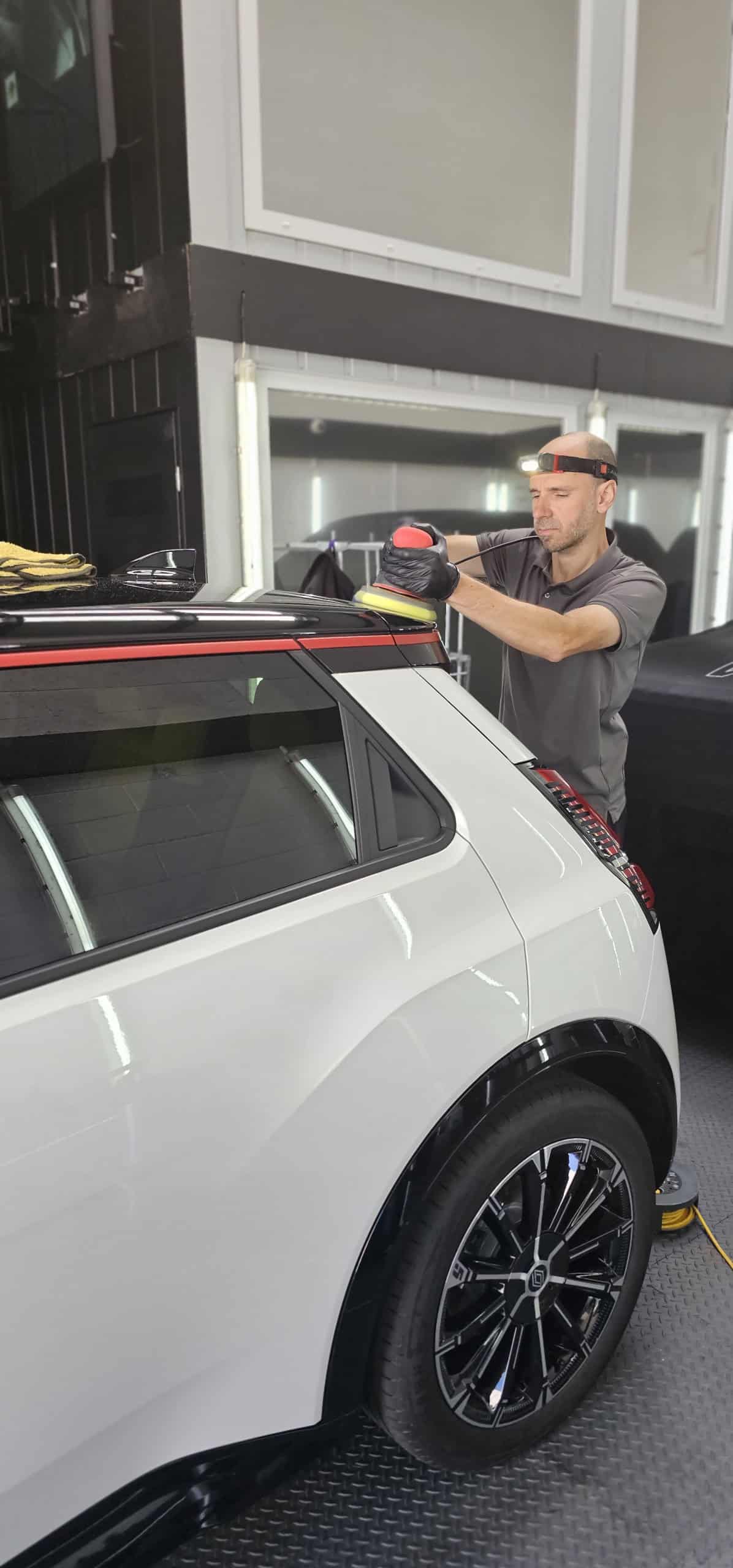
Quality control
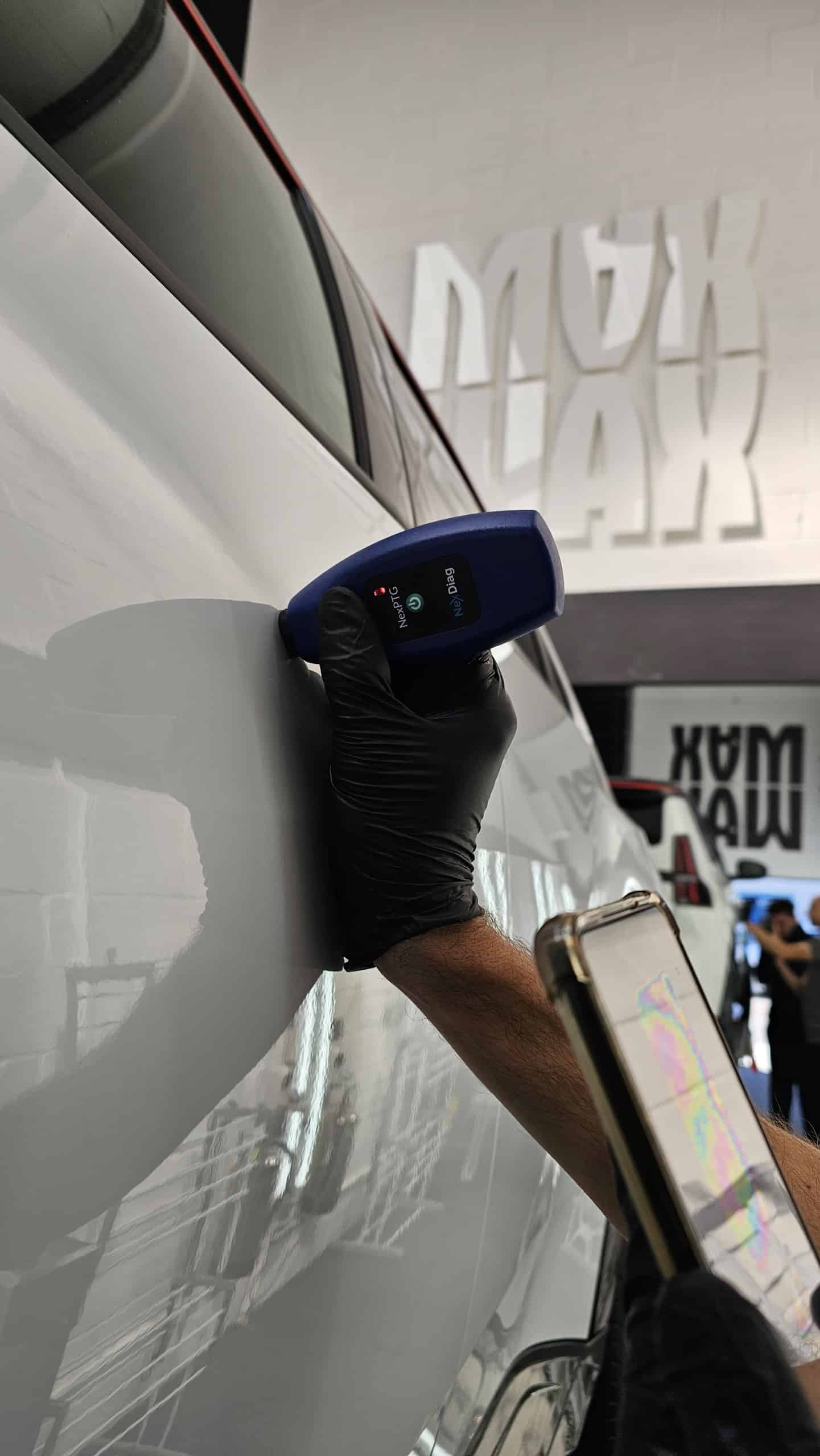
Trust, but verify the factory’s work
Even on a car straight from Renault, we take paint depth readings panel by panel. The point isn’t to catch the manufacturer out. It’s to confirm the factory paint is genuinely consistent before we machine polish. If a panel reads thin, we adjust our pads, our compound, and our pressure. The whole point is not to remove what little clear coat is already there.
Stage one complete
Williams 10H is on
Foundation layer applied across every painted panel. From here the car needs 24 hours undisturbed in controlled conditions, then a fortnight on the road for the chemical cross link to fully complete before stage two can begin.
The benefit of the ramp
Williams 10H going onto the alloys
Wheels are one of the panels that suffer most over a car’s life: brake dust, kerbing, road grit. Coating them properly means raising the car so every face of every spoke can be reached cleanly.
What happens next
The Renault 5 will now go onto the same regime as the XC40 before it: regular MAX Maintain valets, a documented service history of every wash, and the kind of long term care that turns a depreciating asset into a properly preserved one.
We’ll be revisiting this car here on the blog in six months, twelve months, and again at the two year mark, comparing real world performance of the layered system against the standard 10H finish we apply on customer vehicles. Beading behaviour, scratch recovery, gloss retention, contact angle measurements. The lot. And we’ll publish the lot.
Stage one done
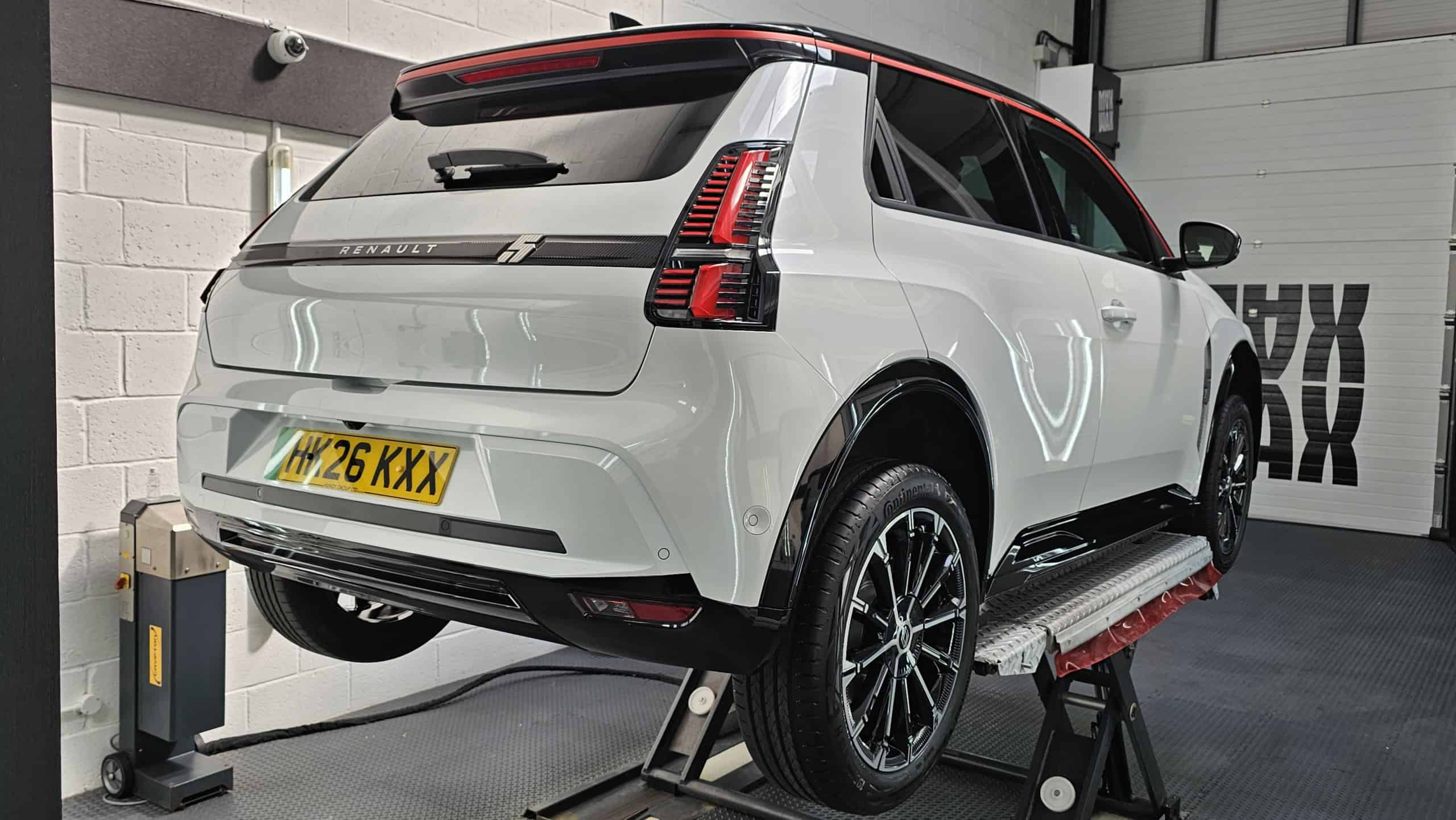
Looking down the side of a properly protected car
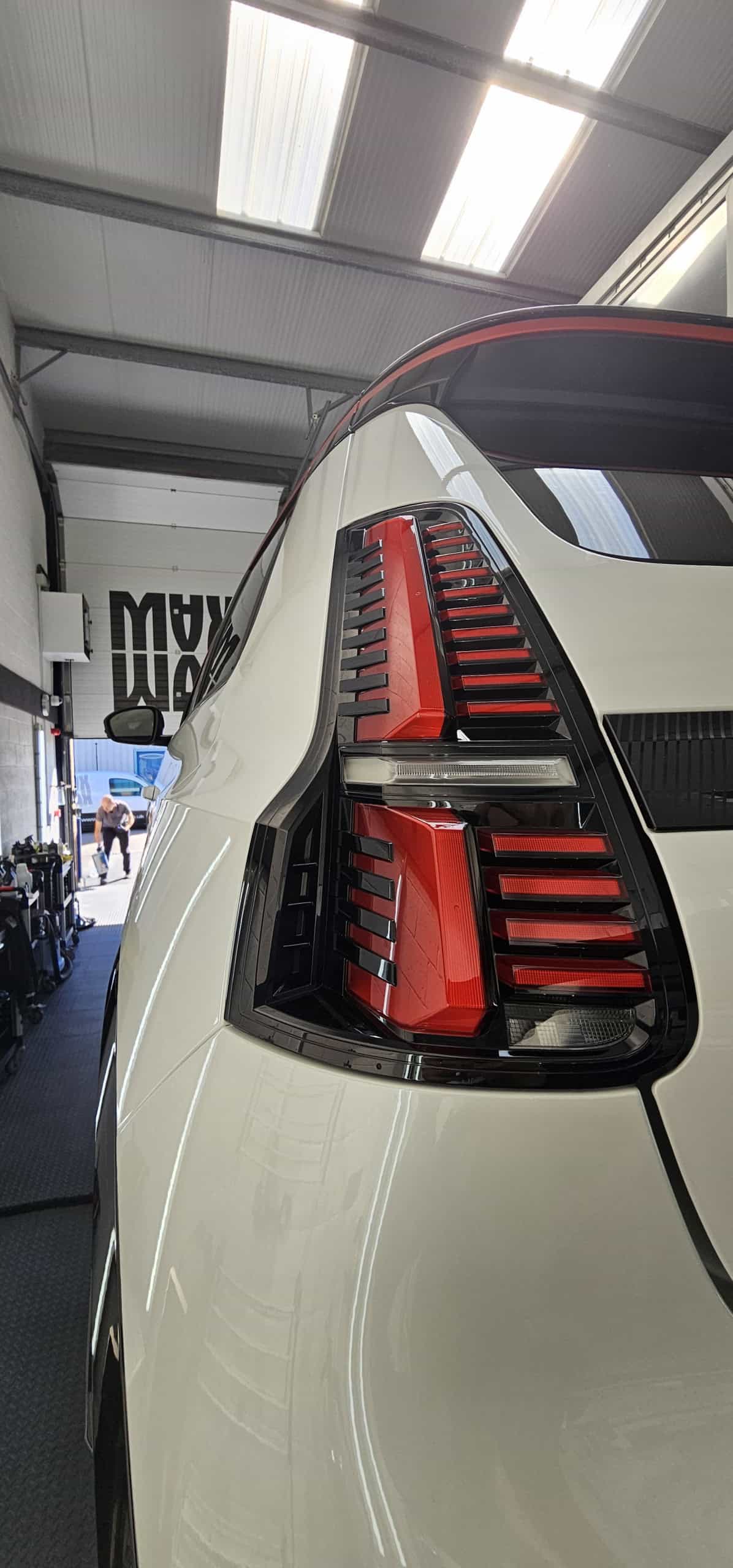
Near side rear quarter, rear lights catching the studio lighting.
Interior protection
Interior protection, the finished article
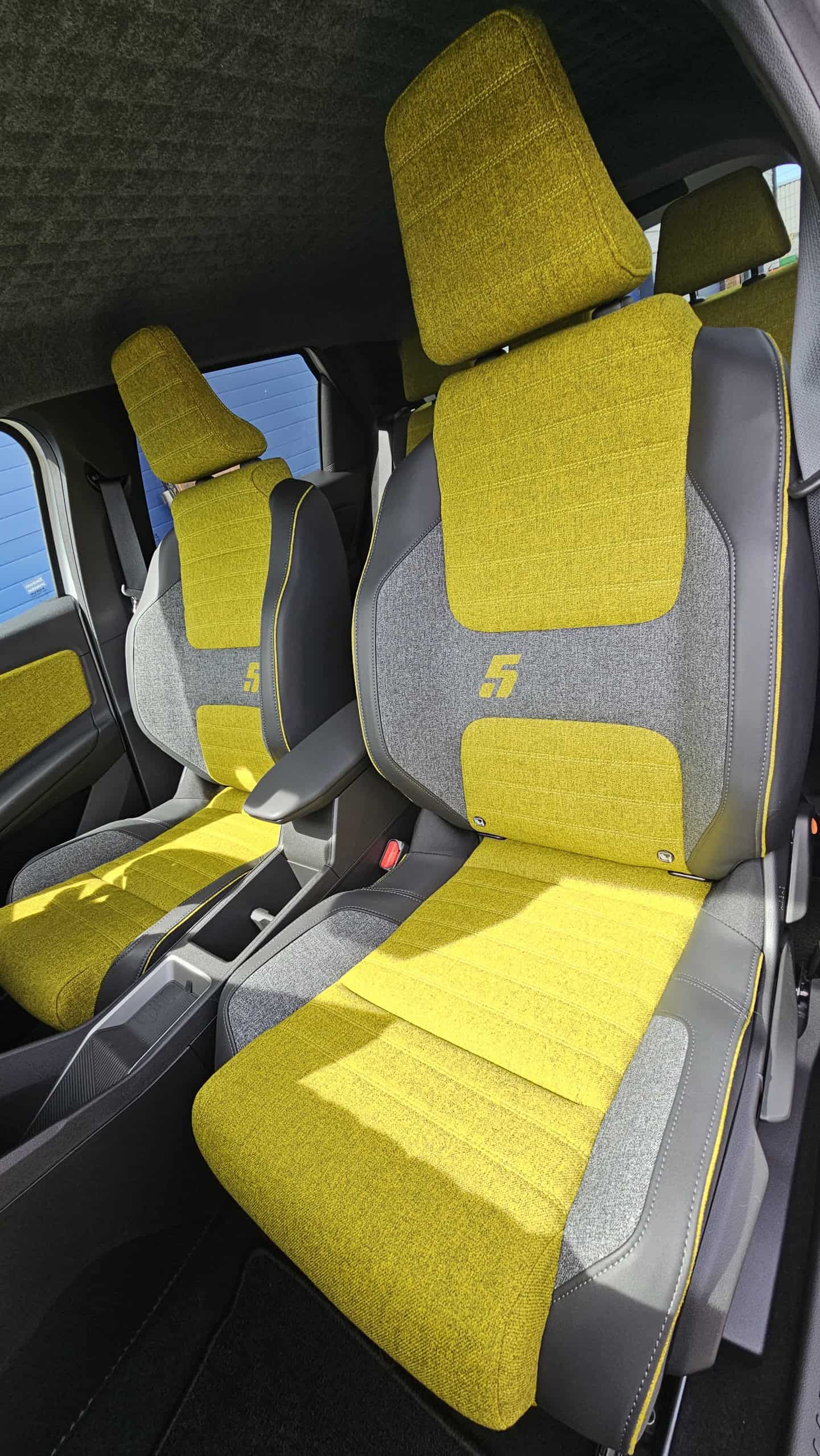
Fabric protection applied to the seats
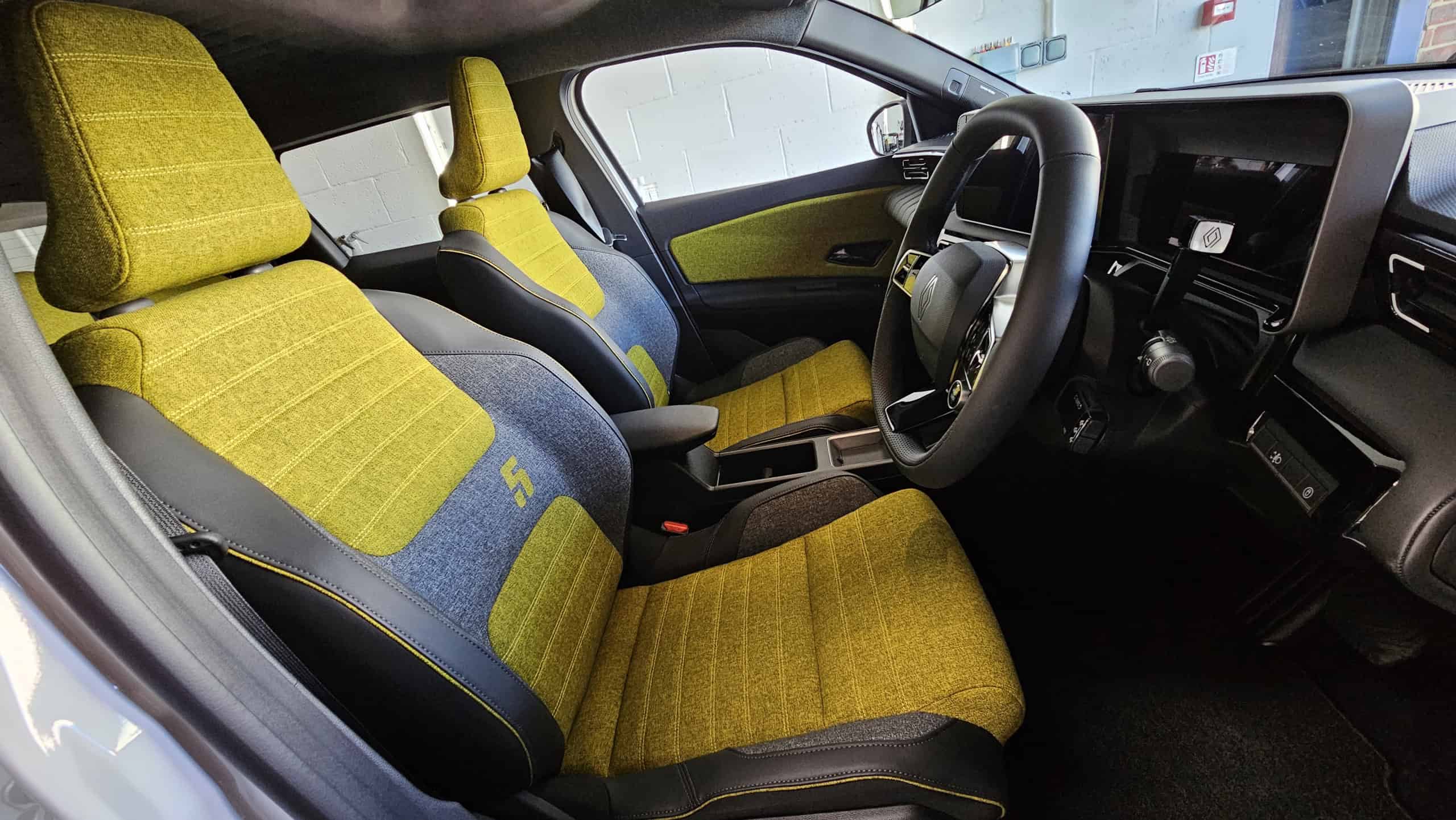
Drivers position, surfaces protected
If the XC40 case study is anything to go by, we already know how this story ends. The point of this one is to show how it begins.
 Ceramic 8H
High-performance coating with 14% solid content and 8H hardness. Provides 89% mirror-like reflection, UV protection, and strong SiO₂ bonding.

Features:
- 8H hardness protection
- 14% solid content formula
- High SiO2 concentration
- UV protection
- Hydrophobic finish
- Lifetime warranty
Ceramic Plus 10H
Engineered with 26% solid content, this dual-layer coating achieves 10H hardness and long-lasting clarity. Its strong Si–N backbone improves gloss, chemical resistance, and surface strength.

Features:
- 10H hardness protection
- 26% solid content formula
- Extremely high SiO2
- Dual-layer system
- Backbone technology
- Enhanced UV protection
- Lifetime warranty
Self Healing Ceramic
The UK's first true self-healing ceramic coating. Repairs fine scratches when heated above 60 °C or gradually at room temperature.

Features:
- Self-healing technology
- Advanced polymer formula
- Automatic scratch repair
- Maximum gloss retention
- Superior chemical resistance
- Ultimate hydrophobic properties
- 5-year durability
Considering new car ceramic coating for yourself?
If you’ve just taken delivery, or are about to, the single most useful thing we can do is get eyes on the car before anything else touches it. Inspection, condition report, honest advice. And from there, the right level of Williams Ceramic Coating for your car, your use case, and your budget.
Book a new car ceramic coating consultation →
Or message us directly on WhatsApp for a quick chat about your car.
Mobile across Sussex, Surrey and Hampshire, or in our Detailing Studio at Brighton City Airport.
Read the bookend post: How to Sell Your Car for More: the Volvo XC40 Ceramic Coating Case Study