Car paint contamination removal – Sussex, Surrey & Hampshire
Car Paint Contamination Removal
Someone else’s paint. Off your car.

Liquid roofing compound, drifted from the job next door. Every panel speckled.
£75 +VAT an hour, mobile or in the workshop.
Overspray, tar, road line paint, render, a neighbour’s fence stain – if it landed on your paintwork and should not be there, we take it off without harming the finish underneath. Mobile teams cover Sussex, Surrey and Hampshire, and the hardest jobs come to our workshop at Brighton City Airport, Shoreham-by-Sea.
Why call today
The clock is the enemy
Nearly every contaminant gets harder and dearer to remove the longer it sits. Call while it is fresh and most cars need no paint correction at all.
24 to 72 hours
That is how long aerosol overspray takes to bond with clearcoat. Caught early, it lifts with clay and solvent alone.
A few days
Road tar and bitumen harden and stain. What wipes off on Monday needs machine polishing by Friday.
The first rain
Concrete, render and plaster are alkaline. Rain activates them and they begin etching the paint on contact.
48 hours
Brushed a freshly painted gate or railing? Within two days we can usually remove the transfer with no clearcoat compromise at all.
What has landed on it
Ten kinds of mess, one specialist
Each contaminant needs its own chemistry. Getting that match right is the whole job – the wrong product takes the clearcoat with it.
Paint overspray
Atomised particles drift from commercial spray jobs and settle across paint, glass, trim and wheels, leaving the surface gritty. Fine-grade clay, dedicated solvents and machine polishing lift it without compromising the paint.
Paint dots and drift
Larger droplets that travelled further before landing – visible to the eye and usually more bonded than fine mist, so they get targeted solvent treatment plus polishing.
Road line paint
Fresh white or yellow marking paint thrown up by roadworks is engineered to bond hard. Paint-specific solvents break the bond chemically without lifting your clearcoat.
Tar and bitumen
Summer is tar season. Hot bitumen splatters sills, lower panels and wheels, then hardens and stains. Citrus or solvent tar removers, then correction if staining has set.
Concrete, render and plaster
Building work splatter is alkaline and aggressive – it etches once rained on. We neutralise the chemistry first, then lift the deposit and polish the area.
Wet paint transfer
Brushed a fresh gate, fence or railing. One of the most common calls we get – emulsion comes off more easily than oil-based gloss, and speed decides how easily.
DIY splashes
Emulsion, gloss, masonry paint and undercoat drips from decorating – they always find whatever is parked on the drive.
Aerosol drift
A rattle-can respray that carried further than expected behaves like fine commercial overspray, and comes off the same way: clay decontamination, then polish where needed.
Graffiti and vandalism
Deliberate spray paint is heavy and covers real area. How fast we reach the car, the paint used and the clearcoat underneath decide the outcome – in many cases the panel is fully restored without respraying.
Industrial fallout and rail dust
Park near a railway or factory and iron particles bond to paint as tiny orange specks. Fallout remover dissolves them – they bleed purple as they go – followed by clay and polish.
A recent job
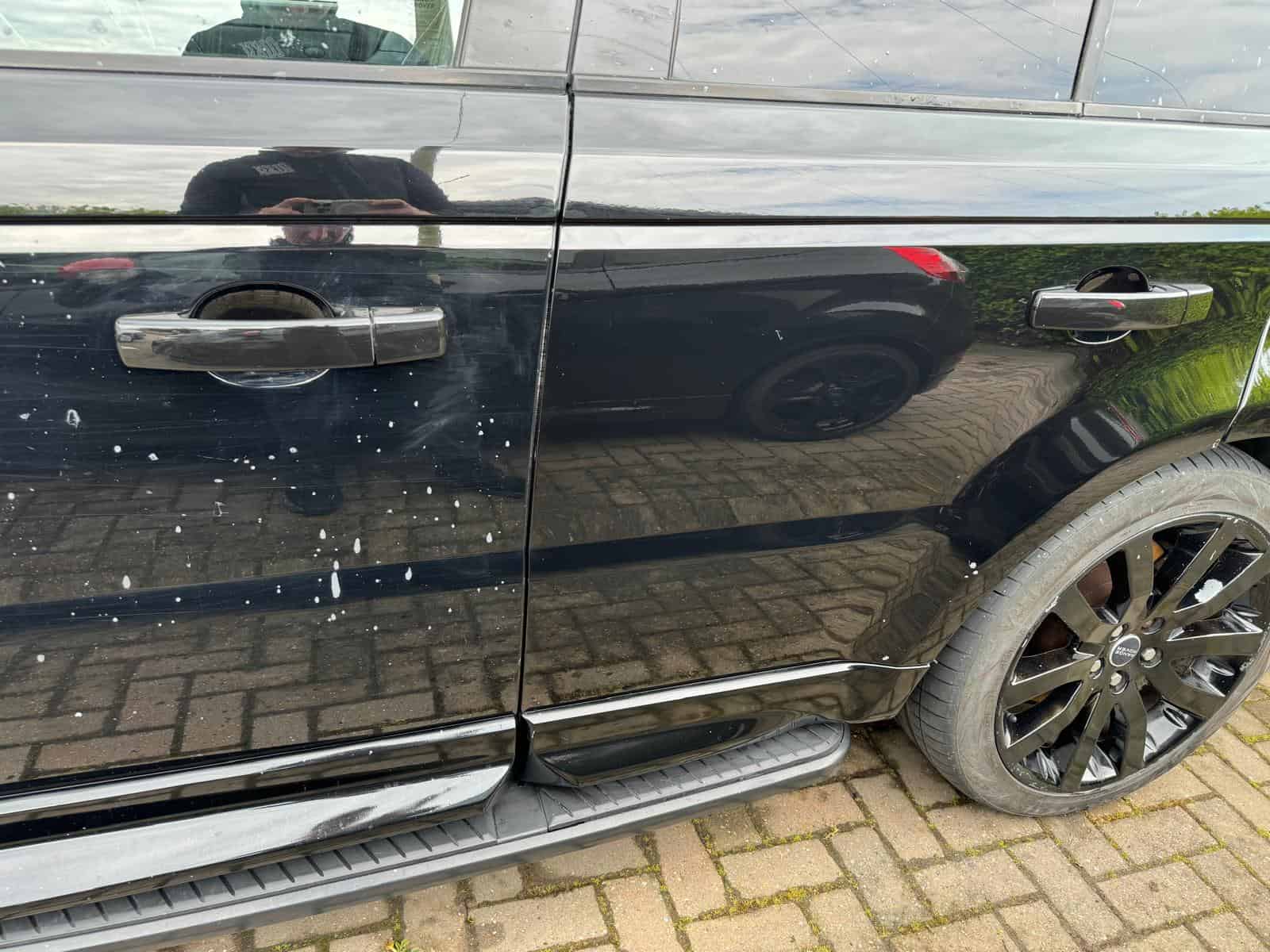
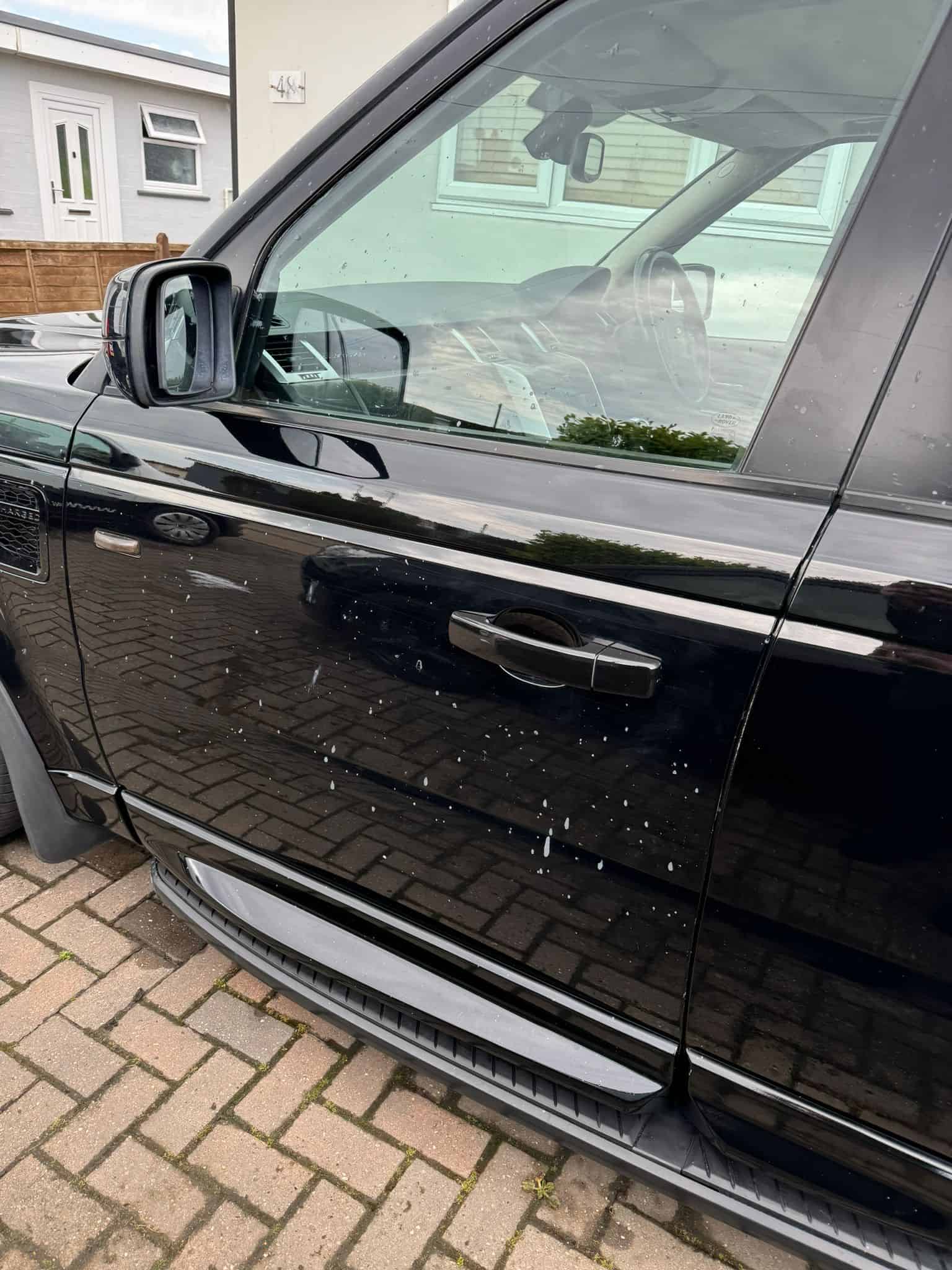
The Range Rover under the roofing job
Liquid plastic roofing compound drifted onto a customer’s car during work on a neighbouring building. Severe, widespread contamination across every panel, the glass and the wheels – and exactly the kind of job we handle week in, week out.
“Looking as new again”
“I have just collected my car from Shoreham Max Wax following an accident with paint spray over my car. The work done by the team at Shoreham was fantastic. The car finish is looking as new again. Would recommend all day long.” – Alan, after a paint spray accident.
Paperwork for your claim
Contractor, roadworks or neighbour at fault? We are not lawyers and cannot advise on liability, but we supply what your insurer or solicitor needs: photographic damage reports, a condition report and an itemised invoice.
How we work
One process, mobile or in the workshop
Wherever the car is – your drive, your fleet yard, or our unit at Brighton City Airport – the sequence is the same.
1. Inspection
We establish what has contaminated the vehicle and how deep it has gone before anything touches the paint.
2. Safe wash
Snow foam and a pH-neutral wash clear loose dirt without grinding it into the clearcoat.
3. Targeted chemistry
Fallout remover, tar remover, paint solvent or alkaline neutraliser – matched to the contaminant, applied with care.
4. Mechanical lift
Fine-grade clay bar work pulls the bonded particles off the surface.
5. Correction if needed
Machine polishing removes any micro-marring left behind. Most fresh jobs never reach this stage.
6. Protection back on
Wax, sealant or ceramic coating reapplied so the panel leaves better protected than it arrived.
The price, straight
One honest rate
£75 +VAT per hour
The final cost depends on what landed, how long it has sat and how far it spread. You get the estimate before we start and an itemised invoice after – no surprises between the two.
£75 +VAT per hour
Photos first, always
A few photos on WhatsApp tell us the contaminant, the spread and the urgency. The price and timing come back with the assessment – usually within the hour.
Quoted from photos.
Scale and reach
From one car to forty
Twenty years on paint
We know the difference between a contaminant we can lift and damage that needs paint correction – and we tell you which you have before we start.
Fleet contamination events
We have restored up to 40 vehicles at a single site. For commercial events, call 01903 233449 with vehicle count, location and timeline and we coordinate the response.
Ceramic put back, on the spot
If aggressive removal compromises an existing coating, we reinstate it there and then. We are a Williams Racing approved ceramic installer.
Where we come to you
Coverage
Mobile car paint contamination removal runs across East Sussex, West Sussex, Surrey and Hampshire as standard. For fleet and commercial contamination events we travel further – Berkshire, Buckinghamshire, Greater London, Hertfordshire, Oxfordshire and beyond.
Paint spilled inside the cabin or boot rather than on the outside? That is a different process and speed matters even more – read our paint spill inside the car guide.
From our Google reviews
Contamination jobs, in their owners’ words
Overspray, tar and contamination removal jobs from across Sussex, Surrey and Hampshire sit among our five-star reviews.
Straight answers
Frequently asked questions
How quickly should car paint contamination removal be done?
As fast as possible. Aerosol overspray can bond with clearcoat within 24 to 72 hours, tar and bitumen harden within days, and alkaline contaminants like concrete and render begin etching on first contact with rain. Same-day or next-day treatment gives the best chance of full removal without paint correction.
Can paint overspray be removed without damaging the clearcoat?
Yes, in most cases. We use fine-grade clay bars, dedicated paint-safe solvents and controlled machine polishing. Where overspray has bonded deeply, light paint correction may be needed – but the panel does not normally require respraying.
Who is liable for paint overspray damage to my vehicle?
Usually the contractor responsible for the spraying, or their insurer. Liability is a legal matter we cannot advise on, but we provide the documentation – photos, condition report and itemised invoice – that you or your solicitor will need to make a claim.
What is the difference between paint overspray and paint dots?
Overspray is fine atomised mist that leaves a gritty texture across large areas. Paint dots are visible droplets that travelled further before landing, individually identifiable and often more deeply bonded. Both respond to similar removal techniques; dots need more targeted attention.
Can you remove tar and bitumen spots from car paint?
Yes – it is a routine job for us, especially through the summer roadworks season. We use professional citrus or solvent-based tar removers depending on severity, and follow up with paint correction where staining has set in.
How do I get fresh road line paint off my car?
Do not scrub it with abrasive cleaners – you will mar the clearcoat. Road marking paint is engineered to bond hard to surfaces, so we use specific paint-removing solvents that break the bond chemically and leave your clearcoat intact.
Will paint contamination removal damage my ceramic coating?
A ceramic coating actually makes contamination easier to remove, because it stops particles bonding directly to the clearcoat – that is one of its core benefits. If aggressive removal is needed and the coating is compromised, we reinstate it. We are a Williams Racing approved ceramic installer.
Do you handle multi-vehicle fleet contamination events?
Yes. We have restored up to 40 vehicles at a single site and have the team and equipment to manage commercial-scale events efficiently. Get in touch with vehicle count, location and timeline for a coordinated response.
How much does car paint contamination removal cost?
Our standard rate is £75 +VAT per hour. Total cost depends on the type of contamination, how long it has been on the vehicle and how widespread it is. The fastest way to an accurate quote is to send photos via WhatsApp.
Do you offer mobile paint contamination removal?
Yes – most of our work is mobile, covering Sussex, Surrey and Hampshire. We come to your home, workplace or fleet site, and travel further afield for larger commercial events.
If someone else caused the contamination, can I claim compensation?
Often yes. If a third party caused it – a contractor, a roadworks operation or a neighbour – you may be entitled to recover the removal cost. We provide detailed photographic damage reports and itemised invoices suitable for insurers, contractors or legal representatives.
Do you have a workshop, or are you only mobile?
Both. Our mobile teams cover Sussex, Surrey and Hampshire, and for the most challenging jobs you can bring the car to our workshop at Brighton City Airport, Shoreham-by-Sea, BN43 5QG.
Before it bonds
Send the photos, stop the clock
A few photos on WhatsApp get you the contaminant identified, the price and the timing – usually within the hour. The sooner we see it, the less your paint goes through.