Sussex, Surrey & Hampshire
Paintwork Correction
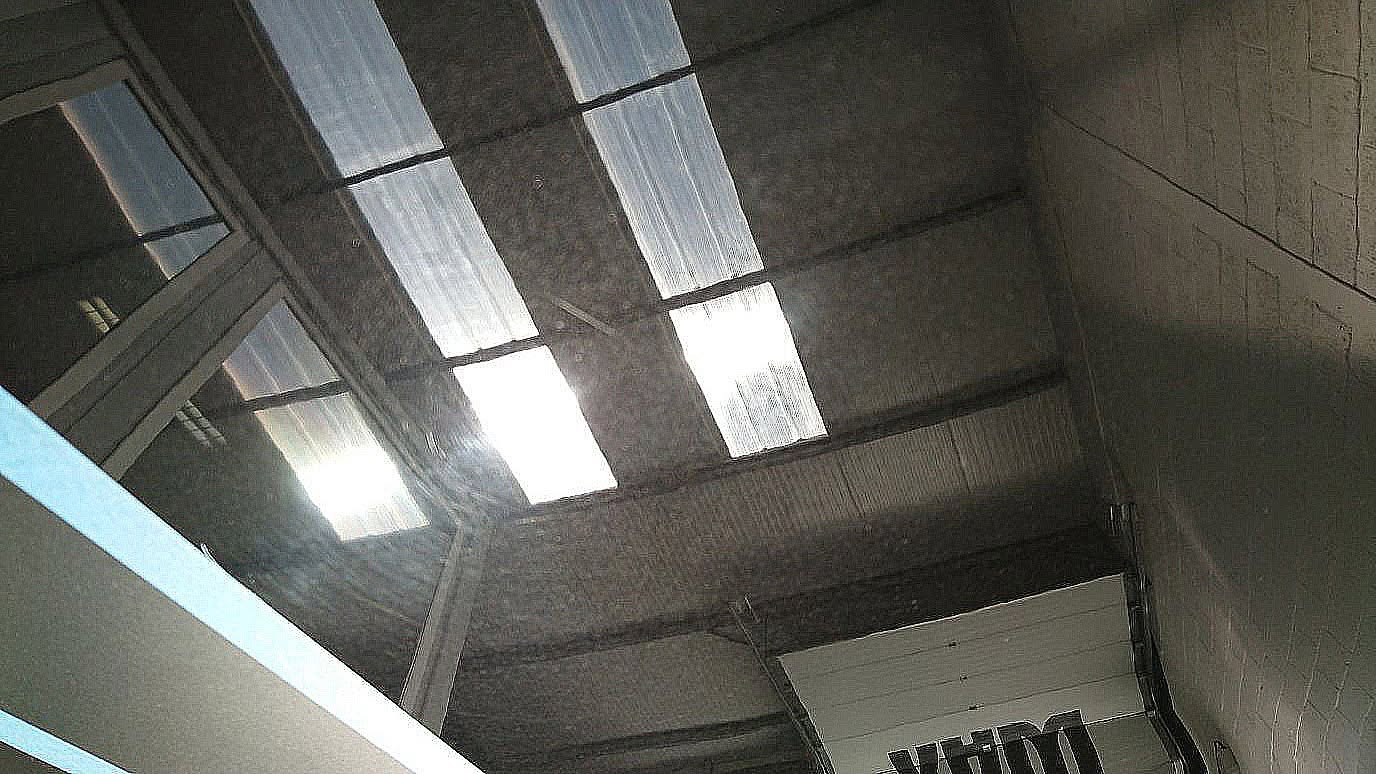
Look at the sun in your glass.
Glass Paint Before After
Now look at it in your paint.
In the glass it’s a sharp white dot with clean edges. On the paint, the same reflection usually sits in a haze of fine circular scratches. The glass isn’t the target, it’s the reference. It shows you what a clean reflection looks like, so you can see what your paint is doing. Bring the car to Shoreham and we’ll check it for free.
What it is
Taking the marks out, not covering them up
Paintwork correction is machine polishing. Your colour sits under a clear layer, and almost everything you can see wrong with the paint is in that clear layer rather than the colour itself. We work a very fine amount off it until the marks are gone.
- What comes out Swirl marks and wash scratches, water spot etching, dullness and oxidation, holograms and buffer trails left by someone else’s polisher, and light etching from bird lime.
- What doesn’t Anything that has gone through the clear layer. The rough test is your fingernail. If it catches in the scratch, polishing it out would mean taking off more clear coat than the car can spare, and that’s a repair job instead.
- Why it never quite matches your glass Glass is flat and hard. Paint is sprayed, so it has a fine texture in it from the factory, called orange peel, and it’s far softer. Correction takes the marks out of the clear coat but it doesn’t flatten that texture, because doing so means sanding away clear coat the car can’t spare. Corrected paint gets close to the glass. It won’t be identical, and anyone telling you otherwise is selling something.
- Why it isn’t a wax or a glaze A glaze or a wax fills fine marks in and hides them for a few washes, then they’re back because they were never gone. Correction removes them. The finish stays until new marks get put in.
Nearly all of it is washing
Very little paint damage happens out on the road. It builds up on the driveway a bit at a time, from grit dragged across the paint and water left to dry on it in the sun.
Beyond correction
Orange peel removal 
Look at almost any car in direct light and the surface has a fine dimpled texture, like the skin of an orange. It isn’t damage. It’s how sprayed paint dries, and it left the factory that way.
Correction leaves that texture alone on purpose, because flattening it means sanding clear coat, and on a daily driven car that’s clear coat worth keeping. When the finish needs to go beyond what the factory intended, for a show car or a resprayed panel whose heavier peel doesn’t match its neighbours, we take it further: the panel is wet sanded flat until the texture is gone, then machine polished back up to a glass-like gloss.
It’s the deepest work paint can safely take, so it starts with depth readings on every panel, it’s studio work only, and it’s quoted per job once we’ve seen the car. If your paint hasn’t enough to give, we’ll say so and tell you what it can take instead.
Why there’s no price list
We don’t sell stages.
Most detailers offer a Stage 1 or a Stage 2. Those numbers only count how many times someone plans to go over the car with a polisher. They say nothing about your paint, because nobody has looked at it yet.
So we charge for time on the car instead. £75 +VAT an hour. A full correction at the studio starts at a day, so £600 +VAT, because that is genuinely what it takes to do a whole car properly. Smaller mobile jobs are charged by the hour, and if your car needs a couple of days or more, talk to us and we’ll come to an arrangement.
We won’t quote you a percentage
Plenty of places advertise 70% or 90% correction. It sounds precise and it isn’t. What can actually come out depends on the condition of the paint, how hard that manufacturer’s clear coat is, how much of it is left, and what you want from the car. Nobody can put a number on that before they’ve seen it, so we don’t.
Real paint, not a diagram
Paintwork correction, before and after
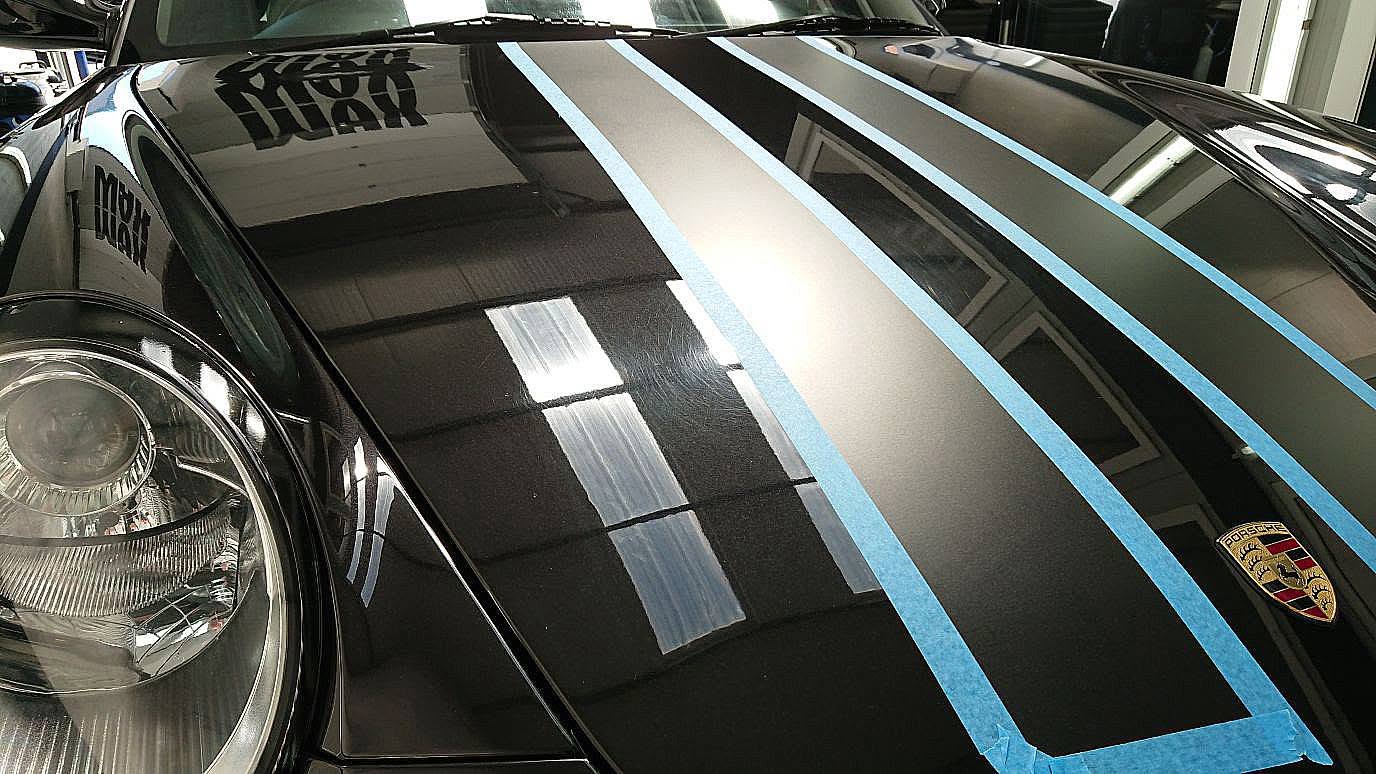
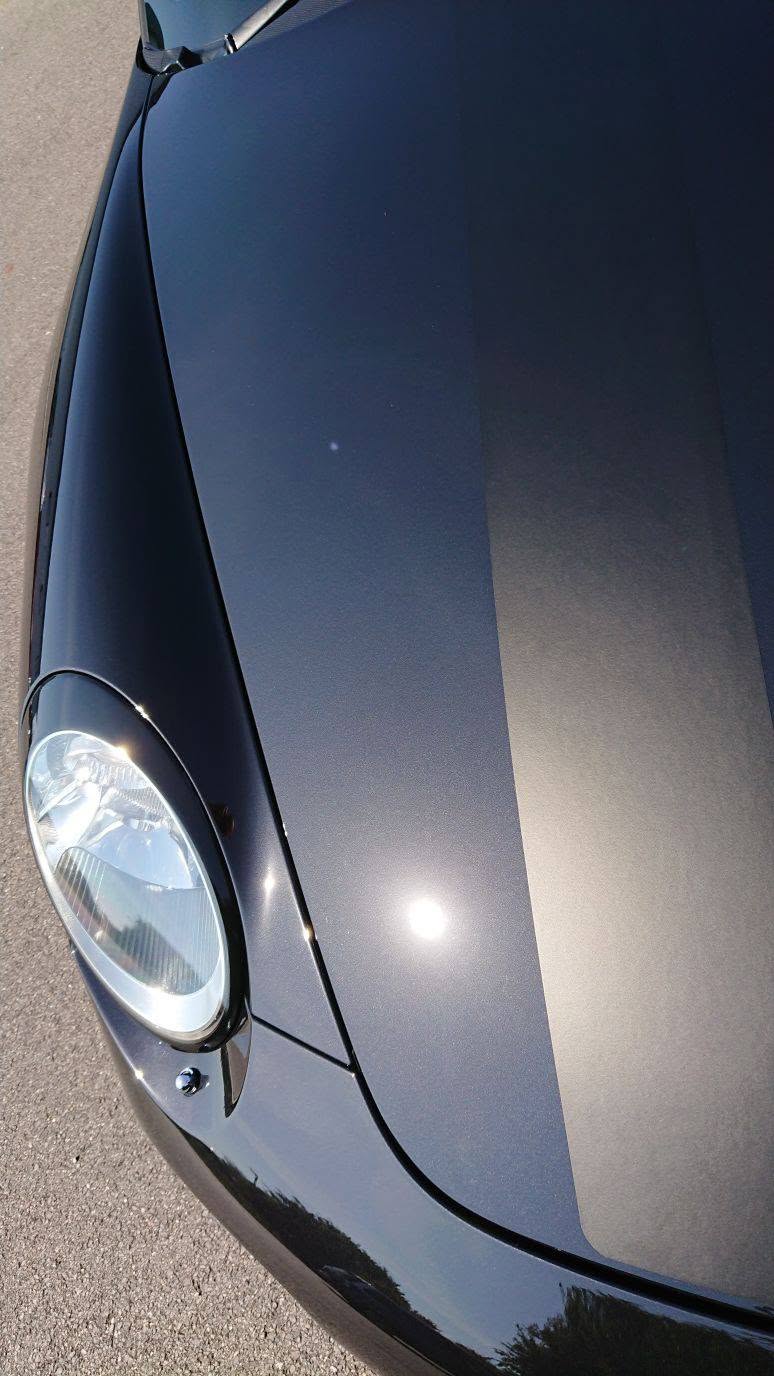
The same Porsche bonnet, photographed while we had it. Black paint is the hardest colour to get right and the easiest to see wrong, which is why we’ve used it here. And just like a real car, the cobwebbing hides at a distance. Stand ten feet back and most paint looks fine. Step in close and look properly. Tap a photo to zoom, and you’ll see what we’re looking for.
Two different jobs
At your home, or at the studio
Some correction work travels fine. Some doesn’t. Here’s the difference.
Straightforward correction
One scratch, a scuffed panel, or light swirling before you sell the car or hand back a lease. Our vans carry their own power, water and lighting. We cover Sussex, Surrey and Hampshire.
Usually around two hours.
Full paintwork correction
Steady light, room to roll it outside into the sun, and the time to do it properly. Heavier work and anything going under a ceramic coating is done here.
From £600 +VAT. Most cars take one full day. Neglected paint, black and solid colours and larger vehicles can take two or three.
Free, and no obligation
Bring the car down
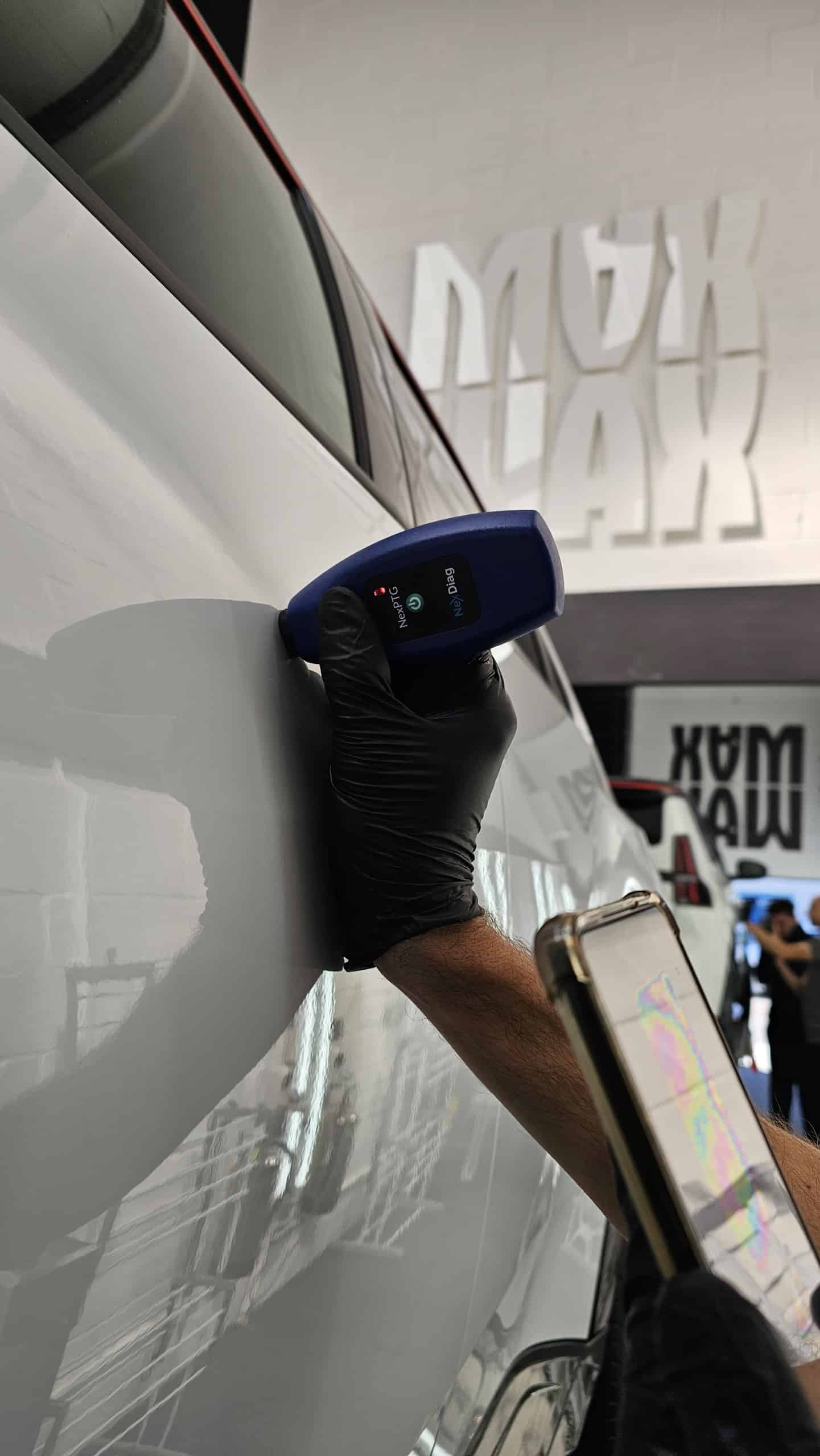
Half an hour at the studio tells us far more than photos or a phone call ever will. We put it under the lights, take it out into the sun, take the readings, and give you a price.
- Paint depth Measured on every panel. Thin areas and old respray work show up straight away, and both change what we can safely do.
- A test patch One small area done first, to see how your paint reacts before we go any further.
- Photos Before, during and after, under the same lights. You see what came out and what didn’t.
- Coffee while you wait
- Courtesy cars available, including our new electric Renault 5s
- A fixed price before any work starts
The answer is never no
If the paint is too thin to polish safely, or a panel needs more than correction can give, we’ll tell you before we start, and we’ll tell you what will sort it instead. Between correction, MAX PAINT for proper repairs, and a coating to protect the result, there’s always a route to the finish you want.
You’ll know before we start
Most cars come up better than they left the factory. A few marks can’t be taken out safely. We tell you which ones when we check the car, not when you collect it.
Who does the work
Polishing cars here since 2004
We were machine polishing paint in Sussex long before anyone called it paintwork correction. Dan runs the studio floor day to day, and no car goes home on one person’s opinion of it.
Tristan Green
Managing Director. Started MAX WAX. Not involved in the physical art of detailing day to day, but still liable to step in for a better result, teaching as he goes. Runs the business as one connected ecosystem. Anything wasted, or past its best in how it looks or works, gets rethought and upgraded. The team is the biggest investment, but so is how the microfibres are washed, dried and folded. Never satisfied. Everything matters.
Matthew Firkins
Sales & Service Manager, with us since 2019. Five years of practical detailing and training. He once trained a technician so closely that the pair worked like a synchronised swimming team. Obsessive about details, with a true passion for the craft. Now stepping up to oversee operations, he runs the paint checks, looks after customers the right way, and loves fixing the awkward stuff.
Daniel Smykowski
Workshop Manager, with us since May 2018. Runs the studio floor, trains everyone on it, and keeps a tight ship, everything in its place so the technicians can work efficiently, and no room for an untidy workshop. Obsessive about getting details right, to the point we sometimes have to tell him to stop, that the customer isn’t paying for that level of finish. It just isn’t in him to walk away.
The mobile technicians
The vans aren’t a separate outfit. Our mobile technicians are the up and comers, involved in this kind of work every day and taught the craft directly by the three above, professionals who care about details most people would never notice. The standard is the same whether the van comes to you or the car comes to the studio.
Common questions
Straight answers
How long does paintwork correction take?
Most cars take one full day at the studio. Badly neglected paint, black and solid colours and larger vehicles can take two or three days, and hard German clear coats, so most BMW, Audi, VW and Mercedes, take noticeably longer than softer Japanese paint. Mobile work on one panel is usually around two hours.
Will every scratch come out?
No, and be careful of anyone who says otherwise. If you can catch a fingernail in it, it has usually gone too deep to polish out safely. We’ll point those out when we check the car.
Do I need paintwork correction before a ceramic coating?
Nearly always. A coating is clear and lasts years, so it keeps whatever is underneath it, swirl marks included.
Is paintwork correction worth doing on a lease car?
Often, yes. It can take out marks that would be charged as damage at the end of lease inspection, usually for a lot less than the charge. Book it before the inspection, not after.
Find out what your paint can do
It’s free, it takes about half an hour, and there’s coffee.